
Valletta, Malta: What to Do and Where to Base Yourself
- Malta
- Valletta
- History
- Culture
What Valletta is actually like
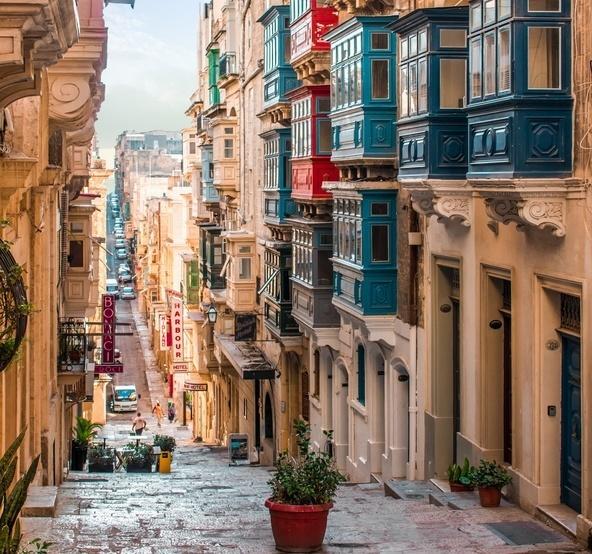
Valletta is Malta's capital and a UNESCO World Heritage Site, built by the Knights of St John after the Great Siege and barely changed in shape since. It suits people who want to walk without much of a plan: start at City Gate and every side street either dead-ends at a church or opens onto the harbour. By day it is museums, the National Museum of Archaeology, and cafés doing a steady trade in coffee and people-watching. By evening the squares fill with restaurant tables and the whole city gets better-looking as the light drops.
It does not suit anyone chasing the kind of nightlife you get in St Julian's. The bars close earlier here and the crowd skews older. It is also built on a slope, with steps cutting across several of the side streets, so it is worth knowing that before you commit to a suitcase with bad wheels. What Valletta does instead is atmosphere, not volume.
Walking it properly
Republic Street runs the full length of the city from City Gate down to Fort St Elmo at the tip, and it is the easiest spine to navigate from if you lose your bearings, since every side street off it leads somewhere worth a detour. From City Gate, head for the Upper Barrakka Gardens and the view straight down over the Grand Harbour to the Three Cities on the far bank, best around six when the stone turns gold. St John's Co-Cathedral is a short walk from there and worth the entry fee for the Caravaggio inside alone. If you get hungry mid-walk, Is-Suq tal-Belt, the restored Victorian market hall near Republic Street, has enough stalls under one roof that a group with different tastes can all sit down together. Down towards the water, the old warehouses at Valletta Waterfront now hold restaurants and cruise passengers in roughly equal number, worth it for the harbour view more than the menu. At the far tip of the peninsula, Fort St Elmo has stood guard over the harbour mouth since the Great Siege and now houses the National War Museum, a good stop for anyone more interested in Malta's military history than its churches. Strait Street, once Valletta's red-light strip for sailors on shore leave, is where the bars are now, if you want the evening to run past dinner.
Where to stay near the capital
We have a small collection of apartments and guesthouses in and around Valletta itself, close enough to City Gate to walk into the old town within minutes. Have a look at what's available on our Valletta page if you want to be inside the walls for the whole stay. If you'd rather come back somewhere livelier at night and cross over for the day, Sliema is a five-minute ferry away, running roughly every thirty minutes, with the harbour view thrown in for free on the crossing, or St Julian's is a short bus or taxi ride from the capital.
Check-in happens on your phone whenever you arrive. The guest portal has your check-in form and eco tax sorted before you land, and the guest experience team is on WhatsApp around the clock if anything needs sorting once you are here.
Valletta rewards a full day on foot more than a rushed morning between other plans. Base yourself in Sliema or St Julian's, book direct with the local team that actually knows the city, and give the capital the time it is asking for.
Zzzing — A Better Way.