
Malta's Megalithic Temples: How and Where to Visit Them
- Malta
- Gozo
- History
- Culture
- Travel
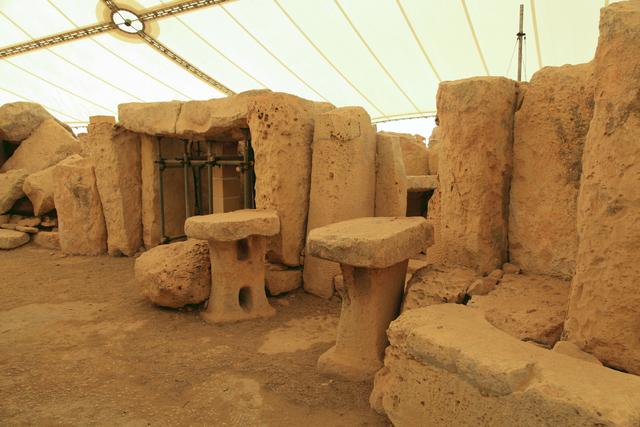
There's a temple in Qrendi with a doorway that lines up perfectly with the sunrise on the summer solstice, built centuries before Stonehenge had a single stone standing and long before the first pyramid went up at Giza. Most visitors drive straight past it on the way to the Blue Grotto.
What are Malta's megalithic temples, and why do they matter
Malta's megalithic temples are a group of Neolithic stone complexes built between roughly 3600 and 2500 BC, and UNESCO lists six of them together as a single World Heritage Site. They are regularly cited as the oldest freestanding stone structures anywhere in the world, raised without metal tools from local limestone by a farming community that then vanishes from the historical record almost as suddenly as it appears. The best-known sites are spread across both islands: Ħaġar Qim and Mnajdra on Malta's south coast, Tarxien close to Valletta, and Ġgantija over on Gozo. A separate, related site, the Ħal Saflieni Hypogeum, is an underground burial complex from the same period. It isn't technically a temple, and visitor numbers are capped daily, so it needs booking well ahead if you want to see it.
Which temples are actually worth visiting
If you only see one, make it Ħaġar Qim and Mnajdra, sold on a single ticket and linked by a short cliffside footpath above the sea, with the islet of Filfla sitting just offshore. Mnajdra's main doorway is the one that catches the solstice sunrise, and the setting alone, garrigue scrub and open water with nothing built for miles, explains the temples better than any information panel could. Tarxien, inside the town of the same name near Paola, is the opposite kind of visit: an urban site with the most heavily decorated stonework of the group, carved spirals and animal reliefs you won't find anywhere else, and close enough to a morning in Valletta to fit into the same day.
Ġgantija, up in Xagħra on Gozo, is the one worth building a whole day around rather than squeezing in. It's the most complete of the six and among the oldest, and the walk up to it through Xagħra's quieter streets is part of the reason to go. Skorba and Ta' Ħaġrat exist too, but they're smaller, less complete, and really only worth it once you've already done the other three.
How to visit: tickets, hours, getting there, and where to stay
Opening hours shift with the season and Heritage Malta adjusts them a few times a year, so check the exact times for your dates on their site rather than trusting an old blog post, this one included. The sites close on Christmas Eve, Christmas Day, New Year's Day and Good Friday every year, worth remembering if you're travelling over the holidays. Tickets can be bought at each visitor centre or online in advance, and if you're doing more than two or three sites it's worth pricing a combined pass against separate entries before you commit. Ħaġar Qim and Mnajdra sit just outside Qrendi and are reachable on the number 74 or 201 bus from Valletta, or a short drive with free parking at the visitor centre. Tarxien is a straightforward bus or taxi ride from the capital. For Ġgantija, take the Gozo ferry from Ċirkewwa, then a short taxi or bus ride up to Xagħra from Mġarr harbour.
We run apartments and homes across Malta's south and out on Gozo, close enough to make either trip a morning out rather than a full day of logistics. Check-in is on your phone before you land, the guest portal has the eco tax and stay details sorted in advance, and the team is on WhatsApp around the clock if your flight gets in at 2am and the temples have to wait until the next morning.
Two or three temple sites make a proper day out, on either island. Pick Ħaġar Qim and Mnajdra for the setting, Tarxien if you're already in Valletta, and Ġgantija if you're making the crossing to Gozo anyway. Have a look at apartments and homes near the south coast, or browse our Malta guide for the rest of the island.
Zzzing — A Better Way.